Finance use case
Finance Automation
Automate the finance work that repeats every close, and keep every number traceable to the transaction that produced it.
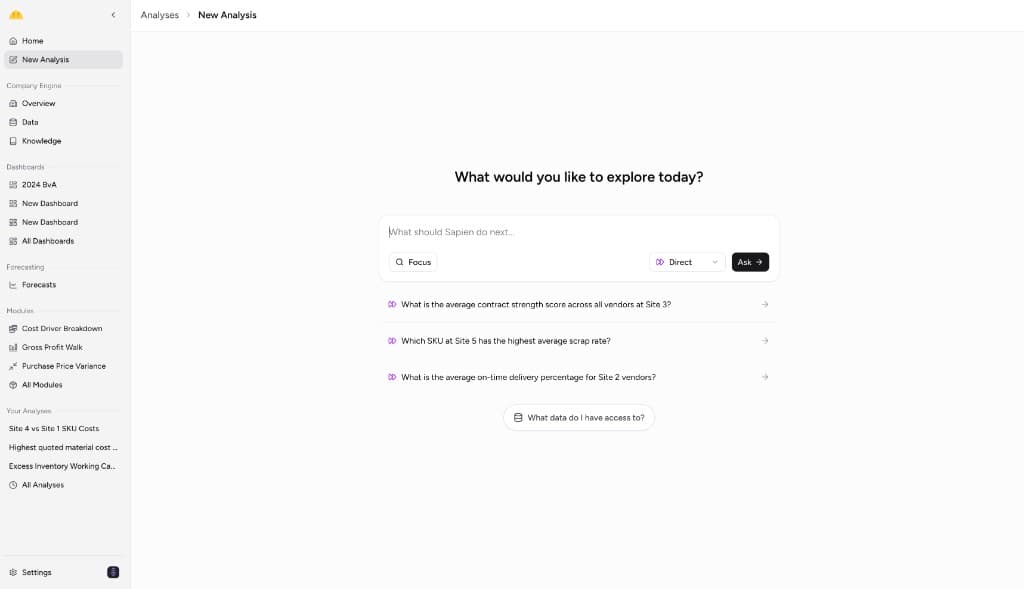
This page is for CFOs, controllers, and FP&A leaders who still rebuild the same analysis after every close. Sapien is the analytical layer on the ERP, warehouse, and spreadsheets you already have. It does not replace the ledger. It takes the questions your team asks every month and answers them with the drivers, the source rows, and a path the next person can rerun.
The short answer
Finance automation is the practice of turning recurring finance work — close commentary, variance bridges, margin walks, and management reporting — into workflows that run the same way every period, on the company's own definitions.
Why this problem persists
The close produces numbers faster than it produces an explanation
The package goes out, and the real work starts: why gross margin moved, which customers or plants explain it, and whether the forecast should change. That work still lives in exports and in one analyst's file.
Each workflow has its own definition of the same metric
Reporting, variance, pricing, and the board deck can each calculate margin differently. Automation that copies those contradictions just sends the contradiction out faster.
Follow-up questions restart the analysis
A chart in the deck is not something an operator can interrogate. The next question means reopening the workbook, which is why the explanation arrives after the decision.
Why Excel and BI tools fall short
Refreshable dashboards still stop at the summary
A dashboard can show that margin missed. It usually cannot say which price, volume, mix, or plant line caused it, or let a finance partner challenge the definition and keep that correction.
Generic automation ignores the company's chart of accounts
Tools that start from a generic finance model miss the exceptions that actually drive the P&L: intercompany, one-time accruals, customer-specific pricing, and the way this business names a cost center.
A stack of point tools does not share one trail
When the close file, the BI extract, and the planning model are separate, nobody can show a reviewer the same path from the sentence in the commentary to the source rows.
How Sapien approaches the problem
Learn the company's representation before automating the workflow
Sapien connects to the systems the team already uses and learns the definitions, hierarchies, and joins behind questions like margin, variance, and forecast versus actuals. The workflow then runs on that context instead of a blank model.
Encode the recurring question, not a one-off export
Variance walks, margin bridges, and reporting packages become workflows a teammate can rerun next period. The logic stays visible, so a controller can see which sources and filters produced the number.
Leave a trail the CFO can defend
An answer is usable in a board or audit conversation only if someone can open it and see the path. Sapien keeps that path with the answer, rather than hiding it in a prompt log.
Real finance questions teams ask
These are the kinds of high-intent questions finance teams ask when they are evaluating whether a workflow can move from static reporting to repeatable, trusted analysis.
For March, explain the gross-margin miss versus plan by product family and customer, and name the three drivers that account for most of the gap.
A margin workflow ranks the drivers and keeps the trail back to the billing and cost lines the team already trusts.
Rebuild last month's variance bridge for the plants that missed, and show price, volume, and mix separately.
The same bridge the team already presents, produced again without rebuilding the workbook from the ERP export.
Draft the management-reporting bullets for the segments that moved more than the threshold, and link each bullet to the underlying lines.
Reporting automation that starts from the movement and stays attached to the evidence a reviewer will ask for.
What outcomes improve
Give the close a repeatable explanation, not only a refreshed number.
Use one definition of margin, variance, and forecast across the workflows that currently disagree.
Let operators ask the follow-up without sending the question back to the person who built the file.
How finance teams use Sapien in practice

Finance Automation
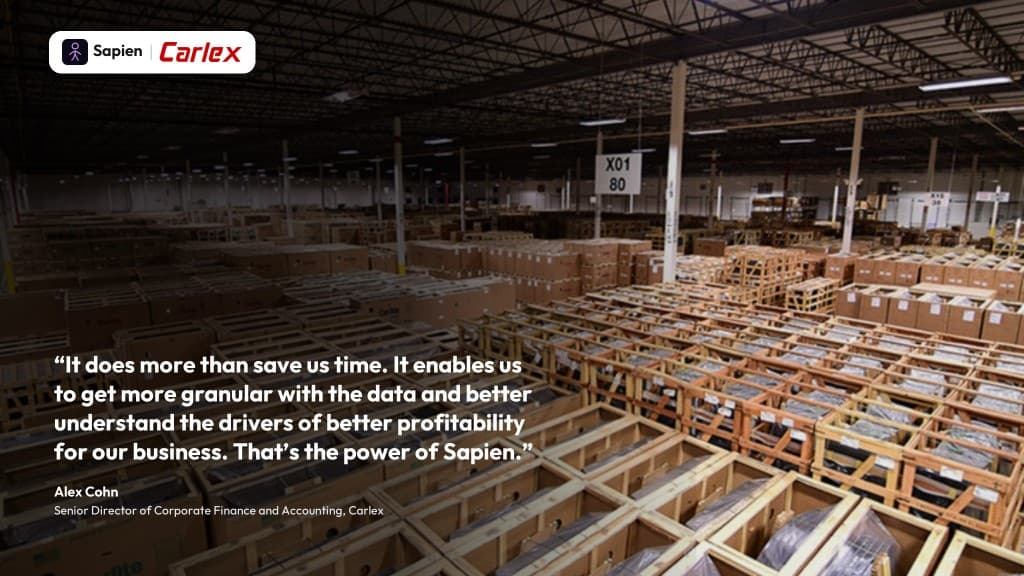
“Sapien, in my mind, is part of my team, part of my organization. I have information faster, a greater level of clarity with the data, and a confident team with accurate information.”

CEO
Want similar results?
Book a demo and see how Sapien would run this workflow on your data.