Finance use case
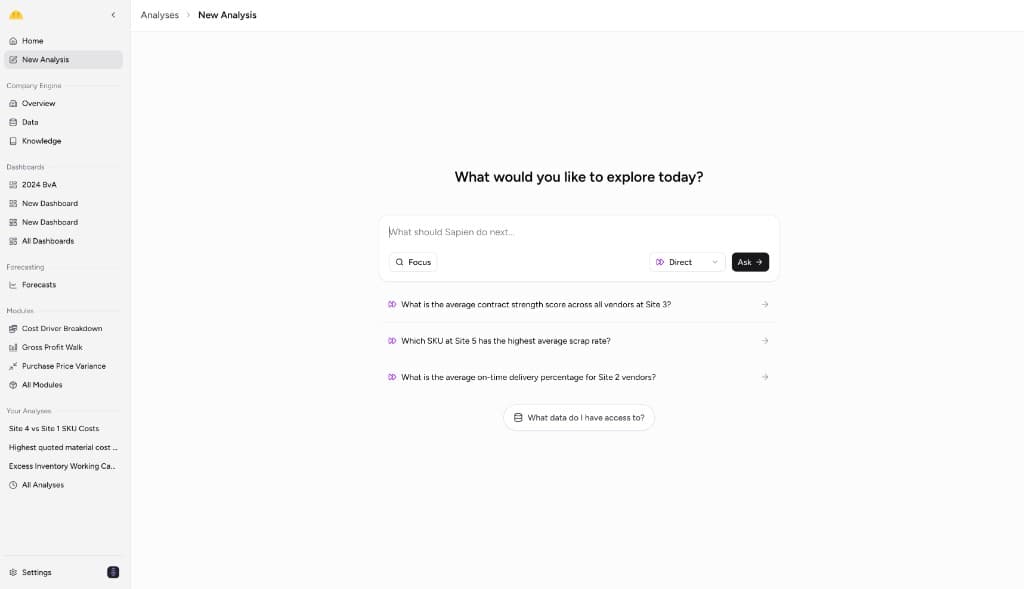
Margin Analysis Software
See what is actually moving gross margin and contribution margin across products, customers, sites, and channels.
Margin analysis becomes valuable when finance can move beyond blended averages and see which products, customers, plants, and channels are actually changing profitability. That level of analysis is hard to sustain in spreadsheet-first workflows.
Why this problem persists
Margin gets diluted before finance can act
Most teams review blended margin at too high a level to see the specific customers, products, plants, or channels driving deterioration.
Cost and price signals move at different speeds
Input costs, freight, labor, discounts, and mix can all shift within the same period, making it difficult to isolate whether margin changes are structural or temporary.
The highest-value questions require deeper granularity
Finance leaders need to know where margin is leaking, what actions will recover it, and how those actions change the P&L across the business.
Why Excel and BI tools fall short
Spreadsheets flatten too much detail
Teams often summarize margin before analysis begins, which hides the product, customer, and operational interactions that explain the real change.
Dashboards cannot keep up with new follow-ups
Margin analysis always creates another question: which SKUs, customers, or sites explain the change? Static dashboards rarely carry enough context to answer without manual rework.
Manual bridges are hard to trust at scale
As more allocations, exceptions, and cross-system joins get layered in, it becomes harder to validate the logic and easier for teams to miss a material issue.
How Sapien approaches the problem
Analyze margin at the level the business actually operates
Sapien decomposes gross margin and contribution margin by product, customer, channel, plant, and other business-specific dimensions using your own definitions and hierarchies.
Unify price, cost, and mix investigation
Instead of bouncing between tools, finance can isolate pricing, discounting, supplier cost, labor, freight, and mix shifts in one analytical layer.
Support action, not just reporting
Sapien turns margin analysis into a reusable operating workflow so teams can monitor leakage, test scenarios, and surface issues before the next board deck.
Real finance questions teams ask
These are the kinds of high-intent questions finance teams ask when they are evaluating whether a workflow can move from static reporting to repeatable, trusted analysis.
Show what drove the 220 bps gross margin decline this quarter by product family, customer segment, and plant.
Sapien quantifies the price, cost, and mix effects at each level and highlights where the largest recoverable leakage sits.
Which customers became margin dilutive in the last 60 days, and was the change driven by discounts, freight, or cost inflation?
Sapien surfaces the accounts, explains the change, and ties the answer back to the underlying transactions and allocations.
Compare the margin impact of a 3% list-price increase versus a supplier switch on our top 20 SKUs.
Sapien reuses the same margin logic for scenario analysis so finance can evaluate the tradeoff with fewer manual assumptions.
What outcomes improve
Move from blended margin reporting to driver-level analysis across the business.
Identify margin leakage earlier and quantify where recovery actions matter most.
Give finance and operators one shared, traceable view of profitability.
How finance teams use Sapien in practice

Margin Analysis Software
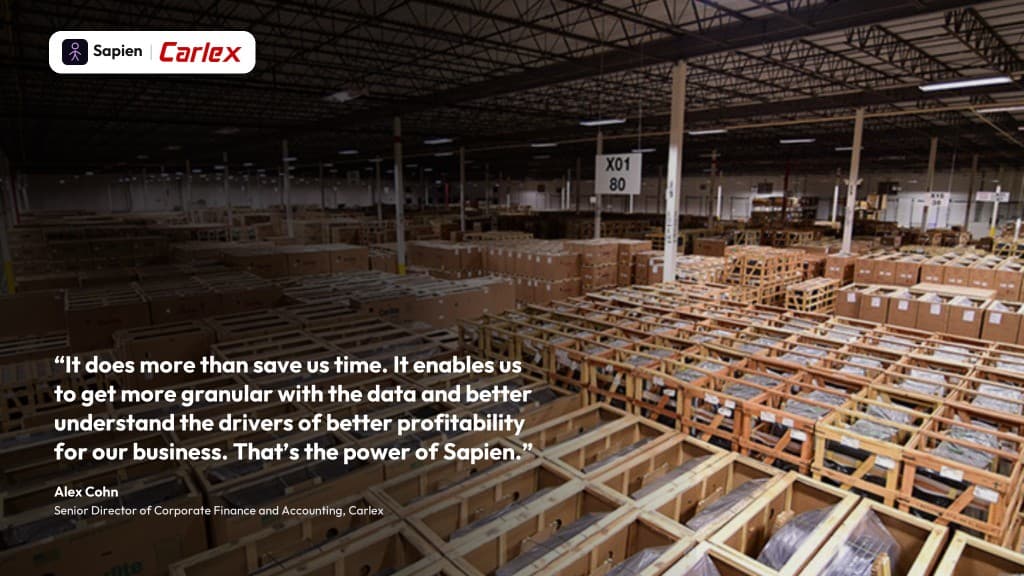
“It does more than save us time. It enables us to get more granular with the data and better understand the drivers of better profitability for our business. That’s the power of Sapien.”

Senior Director of Corporate Finance and Accounting
Want similar results?
Book a demo and see how Sapien would run this workflow on your data.