Finance use case
Budget vs Actuals Analysis
Compare plan to actuals at the same grain your business runs on: entity, product, cost center, and driver—without rebuilding the bridge every month.
Budget vs actuals (BvA) is how finance shows whether the business is on plan. The gap between that intent and the weekly reality is the hours spent re-exporting GL, rejoining to forecasts, and explaining a delta that leadership still experiences as a single headline number.
Why this problem persists
The bridge is rebuilt from scratch every cycle
Teams export plan from one system, actuals from another, and then manually reconcile version names, fiscal calendars, and FX. By the time the BvA is right, the meeting is about to start.
A summary miss hides dozens of line-level stories
Leadership sees entity or P&L line variances, but the work that matters is at customer, SKU, cost center, and account detail. The summary bridge rarely carries enough context to act.
Plan and actuals drift in definition over time
Reclasses, reforecast updates, and mid-year reorgs change the meaning of the same line item. When definitions diverge, finance spends more time reconciling labels than explaining performance.
Why Excel and BI tools fall short
Excel cannot serve as the long-term BvA system of record
File-based BvA breaks when the next person inherits the workbook, when a formula references last month’s tab, or when someone changes a mapping without a full audit trail.
BI dashboards are built for the last question, not the follow-up
A chart can show that SG&A is over plan, but the next step—which cost centers, vendors, and accruals—still requires ad hoc analysis outside the dashboard.
Point tools rarely unify budget, actuals, and driver logic
Planning tools hold one version of truth; the GL holds another. Without a single analytical layer, BvA becomes a reconciliation project instead of a decision workflow.
How Sapien approaches the problem
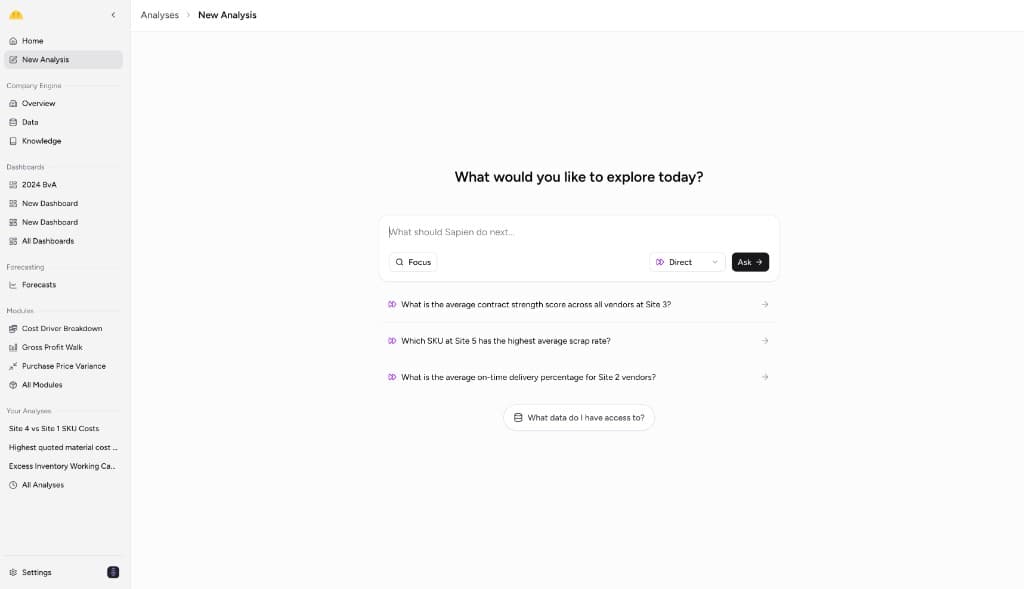
Align plan and actuals in one place
Sapien connects to budget, forecast, ERP, and warehouse sources so you can run BvA on consistent hierarchies, entities, and periods with version awareness.
Decompose BvA into drivers finance actually uses
Move from a single over/under line to price, volume, mix, rate, and timing at the right grain—whether you are working revenue, margin, opex, or project spend.
Package recurring BvA for board and business reviews
Save BvA investigation paths as repeatable workflows so the team is not re-proving the same join logic every month before the MBR and board cycle.
Real finance questions teams ask
These are the kinds of high-intent questions finance teams ask when they are evaluating whether a workflow can move from static reporting to repeatable, trusted analysis.
Show the March 2026 BvA for total gross margin with drivers split by product family, plant, and the top 15 customer accounts versus our annual budget version two.
Sapien runs the BvA at the requested grain, flags the largest plan misses, and ties each bucket back to the underlying plan and actual detail.
Which opex line items drove the $2.1M miss to plan for North America, and is it timing, a one-time accrual, or a structural run rate issue?
Sapien decomposes the opex BvA by cost center, vendor, and accrual movement so the team can separate one-offs from what will repeat next quarter.
Compare Q1 BvA versus plan for every entity, rank by absolute dollar variance, and generate commentary bullets I can drop into the board pack.
Sapien structures the BvA roll-up, quantifies the material entities, and drafts defensible language tied to evidence the CFO can support.
What outcomes improve
Close the book on BvA in hours instead of a multi-day spreadsheet cycle.
Tie every material variance to quantified drivers and the transactions behind them.
Keep plan, reforecast, and actuals in one auditable analysis layer.
How finance teams use Sapien in practice

Budget vs Actuals Analysis
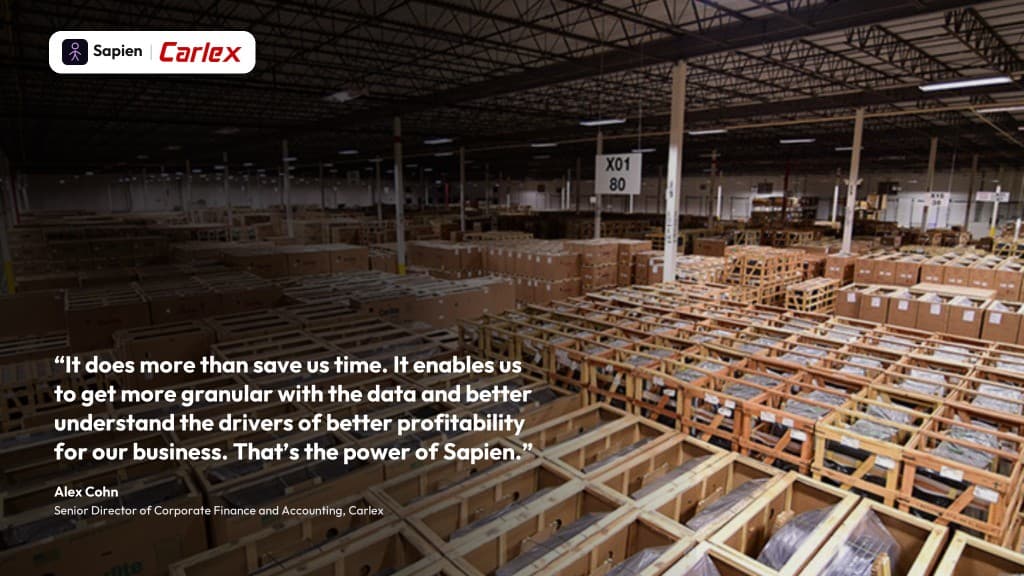
“It does more than save us time. It enables us to get more granular with the data and better understand the drivers of better profitability for our business. That’s the power of Sapien.”

Senior Director of Corporate Finance and Accounting
Want similar results?
Book a demo and see how Sapien would run this workflow on your data.