Finance use case
Root Cause Analysis for Finance
Find the operational, commercial, and accounting drivers behind a miss without rebuilding a new analysis path every time.
Root cause analysis sounds straightforward until a finance team has to move from a top-line miss to the specific operational, commercial, and accounting drivers behind it. That is where static reporting and ad hoc analysis usually break down.
Why this problem persists
A miss is easy to spot and hard to explain
Finance can see when revenue, margin, or cost departs from plan, but isolating the actual root cause usually requires a chain of custom drills across multiple systems and teams.
Operational context lives outside the financial close
The answer often depends on plant, supplier, order, promo, pricing, or channel behavior that is not visible in the summary report finance starts from.
Follow-up questions multiply the work
By the time finance has one explanation prepared, leadership wants to know which customers, sites, products, or operational issues matter most and what changed versus last period.
Why Excel and BI tools fall short
Manual investigation does not scale
Root cause analysis in Excel or ad hoc SQL depends on individual analysts remembering which joins, filters, and calculations to rebuild each time the business asks a new question.
Traditional BI is too static for causal work
Dashboards are designed around known questions. Root cause analysis starts when something unexpected happens and you need to branch into new paths of investigation immediately.
Disconnected data hides the driver
When financial, operational, and commercial data sit in separate systems, teams spend more time reconciling than determining which factor actually caused the result.
How Sapien approaches the problem
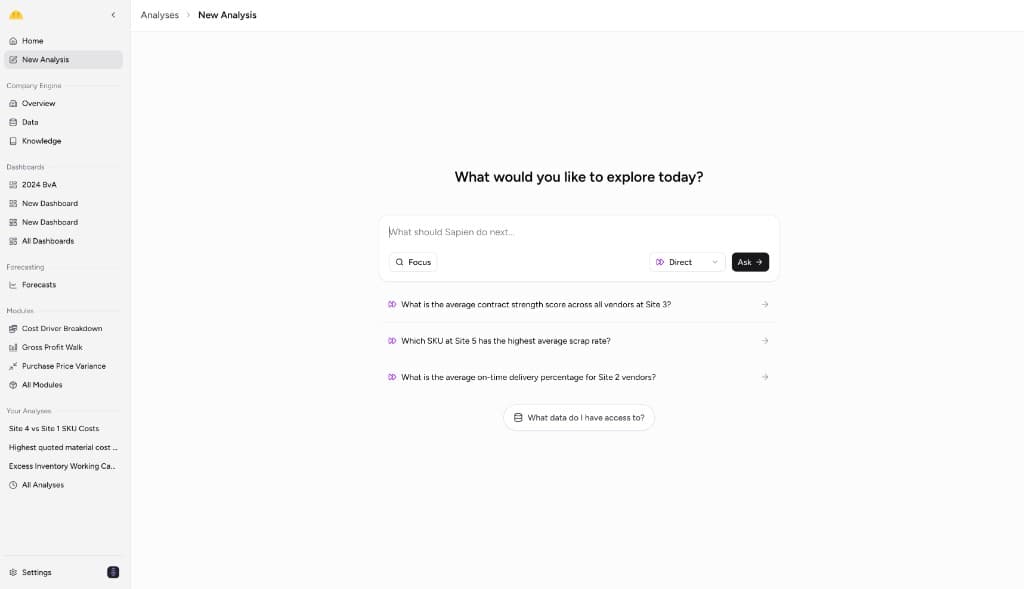
Investigate across systems in one analytical layer
Sapien connects ERP, warehouse, spreadsheet, and operational data so finance can move from summary P&L movement to the underlying rows and business context in one place.
Preserve the chain of reasoning
Each step of the investigation stays explicit, traceable, and reusable, making it easier to validate conclusions and standardize how the team explains issues over time.
Turn one-off analysis into repeatable playbooks
When a root-cause path proves valuable, finance can save it as a repeatable workflow for future periods instead of starting from a blank workbook.
Real finance questions teams ask
These are the kinds of high-intent questions finance teams ask when they are evaluating whether a workflow can move from static reporting to repeatable, trusted analysis.
Root-cause the EBITDA shortfall in Q1 2026 and rank the top drivers by dollar impact across price, volume, labor, and overhead.
Sapien decomposes the miss, highlights the largest contributors, and shows where operational factors and accounting movements intersect.
Explain why material cost per unit increased at the Northeast plant and show whether the change came from supplier price, yield, or product mix.
Sapien traces the issue through plant, SKU, supplier, and work-order detail so finance can separate commercial and operational causes.
For the top five negative variances this month, generate a root-cause summary with supporting evidence and recommended next questions.
Sapien packages the investigation into board-ready commentary while preserving the evidence trail finance can verify.
What outcomes improve
Reduce the time between identifying a miss and explaining its cause.
Connect financial performance to operational and commercial drivers instead of stopping at summary deltas.
Standardize how finance teams investigate and communicate root causes.
How finance teams use Sapien in practice

Root Cause Analysis for Finance
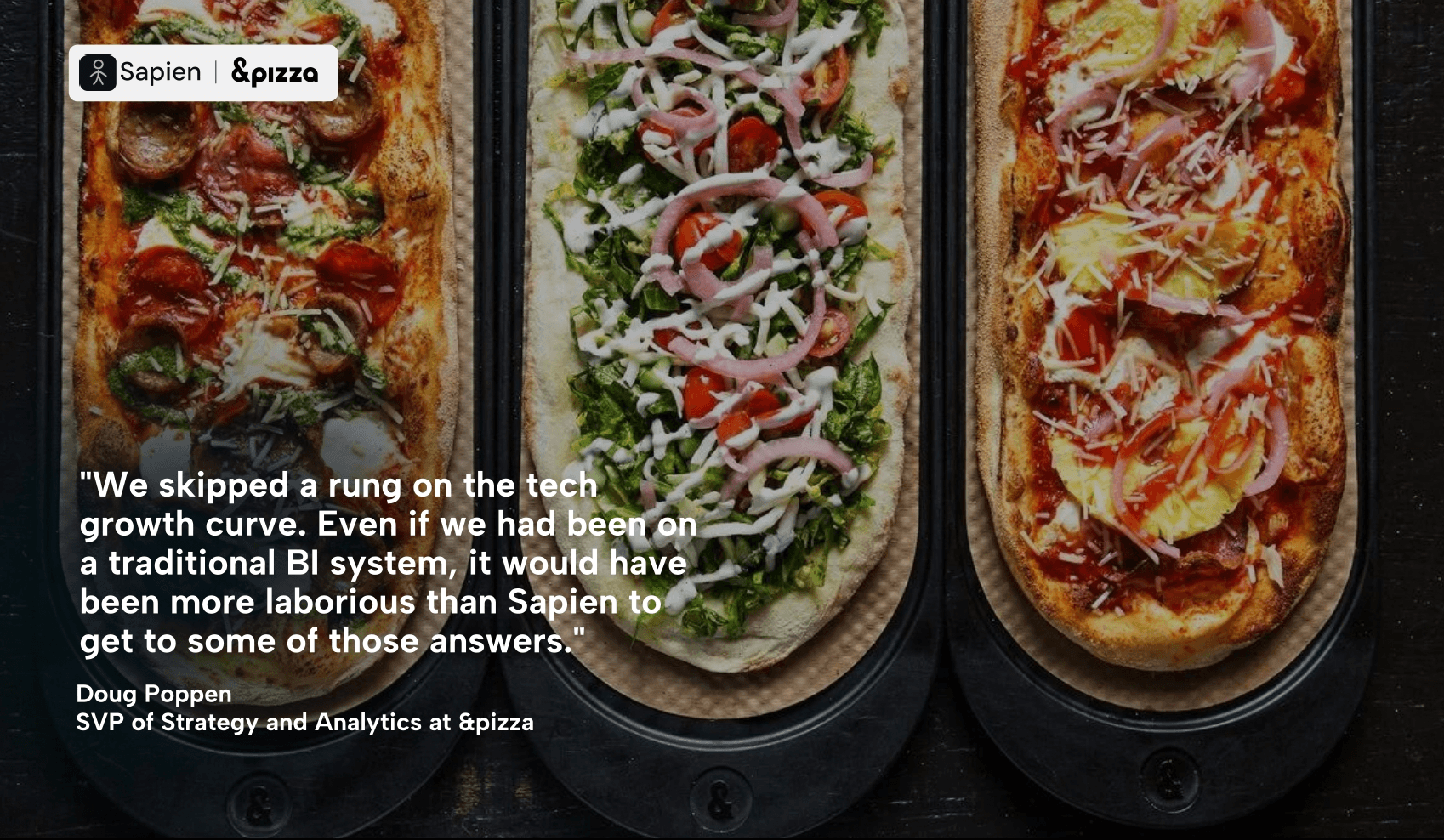
“Sapien reduces my workload answering important but low enterprise impact questions as a team of one. Now shop leaders aren’t beholden to a static daily report. They can view their business over any span of time, which is invaluable.”

SVP of Strategy and Analytics
Want similar results?
Book a demo and see how Sapien would run this workflow on your data.