
AI for Accounting: Close, Flux, and the Questions Under the Entries
How accounting teams use AI on reconciliations, flux, and journal-level questions without handing the ledger to a chatbot.
The Sapien Team
Sapien
Accounting teams are asked two things at once. Close the books, and explain the flux before the package goes to FP&A. Most of the tools marketed as AI for finance start at the second sentence and skip the first. This page is for controllers and accounting managers who need the explanation to start from the entries.
AI for accounting, in the sense that matters at close, is the ability to investigate a reconciliation, a flux, or an unusual balance using the ledger and subledgers the team already trusts, and to show which entries, filters, and definitions produced the answer.
The work that still happens after the books are closed
The ERP holds the entries. The explanation still happens beside it. Someone exports the flux, drops it into a workbook, and writes the sentence that will land in the management report. When the sentence is wrong, the correction is a hunt through journals, not a click on the sentence.
That is a different problem from planning. Corporate finance automation is about the forecast, the cash story, and the board narrative. Accounting is the layer underneath: did this accrual reverse, which entity owns this balance, and which documents support the flux the CFO is about to say out loud.
What an accounting workflow has to show
A useful workflow for this team does four things.
- It starts from the source the reconciliation already uses, whether that is NetSuite, SAP, or the warehouse model built on top of them. The integrations directory is the list of systems Sapien connects to.
- It keeps the company's own mapping. A cost center that means one thing in the ledger and another thing in the board deck has to be visible, not smoothed over.
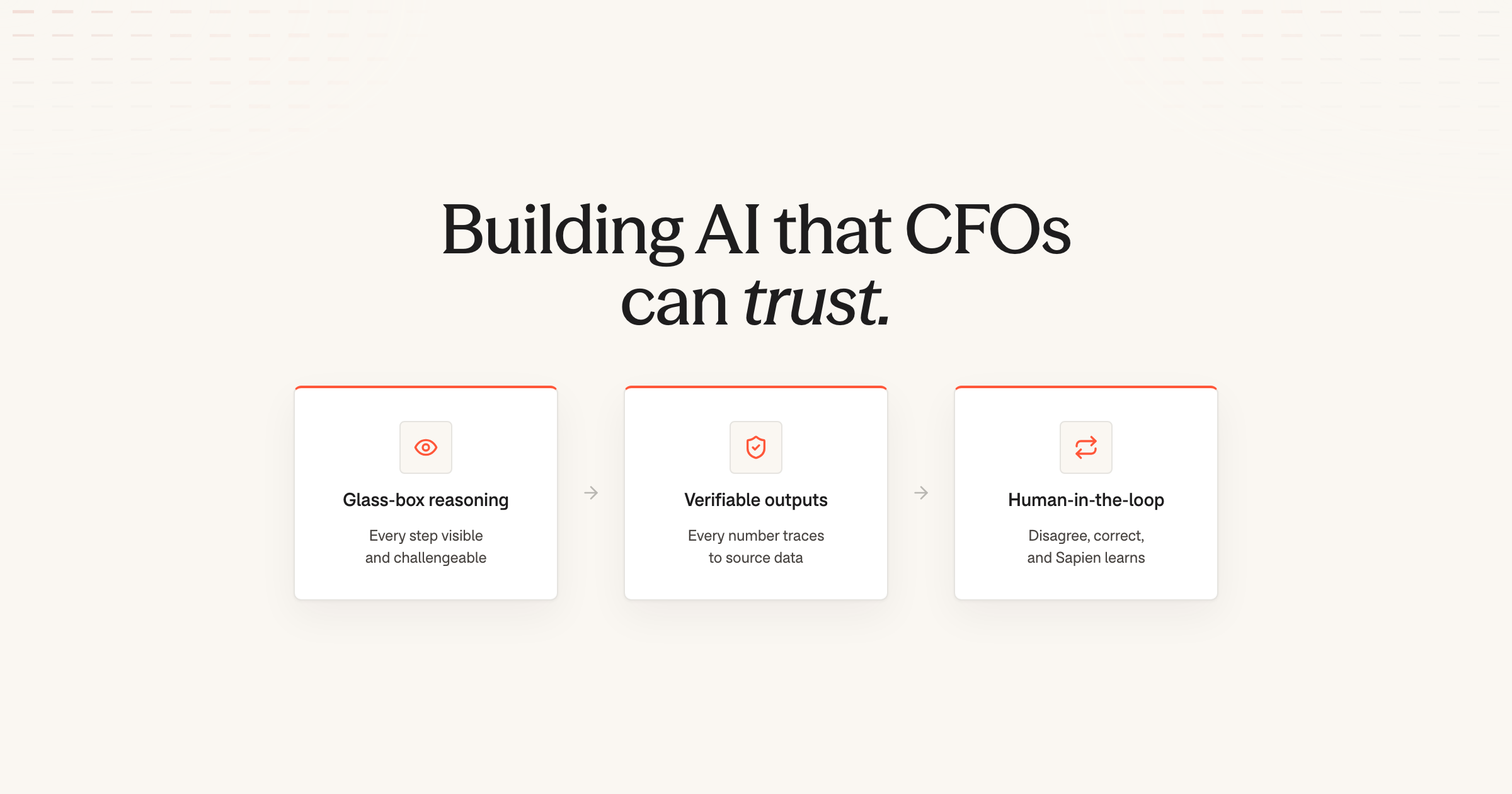
- It lets a reviewer open the number. Root-cause analysis for finance is the workflow for going from the flux line to the entries.
- It remembers a correction. If a controller rejects a mapping, the next close should not reintroduce it.
How Sapien learns a company describes the representation under those steps: the joins, the names, and the rules that are not written down in the chart of accounts.
A published example
At Blink Charging, financial data lived in NetSuite, commercial data in Salesforce, and charger activity in a warehouse. The accounting and FP&A question was not "can a model summarize this." It was whether a person in another function could see a variance without waiting for a specialist to export it. The Blink Charging case study records that shift, including a group of seasonal chargers the team turned profitable. The accounting point is narrower and just as important: the explanation traveled with the number, into teams that did not have their own accountant in the room.
Where to go next
The reporting package that sits on this work is financial reporting automation. The buying questions that apply before a rollout are in financial AI tools. To try a close question on your ledger, book a demo.