
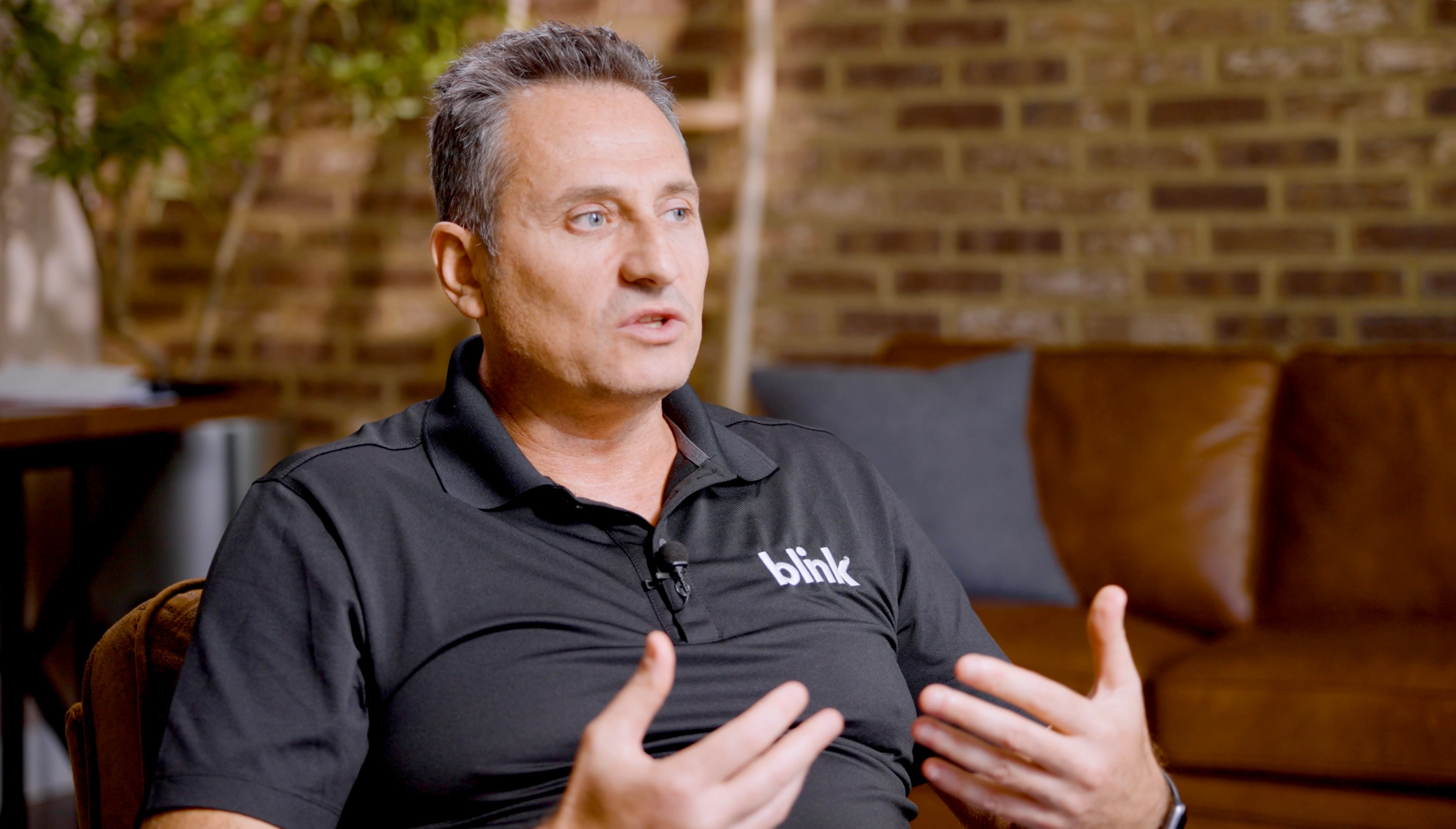

Blink Charging turned a group of loss-making chargers profitable with ~40% margin uplift.
margin uplift for a specific group of seasonal chargers
for a recurring analysis that took one to two hours
to answer a board request that once took weeks or months
“With Sapien, I can actually talk to the system, challenge it, and work like it is another person on my team. It operationalizes the data. Now I can make decisions.”
Chief Financial Officer · Blink Charging
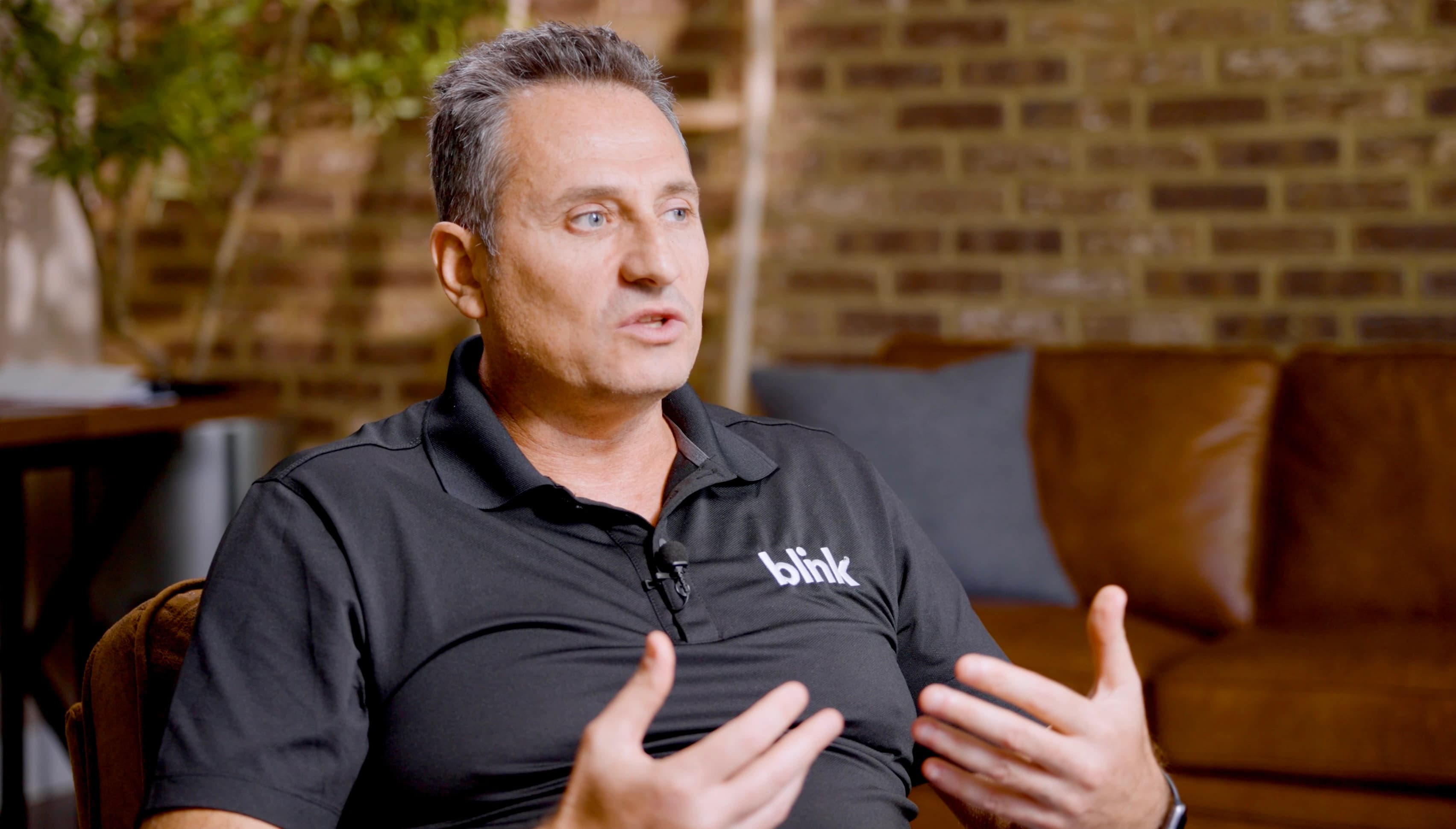
Blink Charging used Sapien to identify a group of seasonal chargers losing money each month. Within several weeks, the team had turned that group profitable, with approximately 40% uplift in margin.
For CFO Michael Bercovich, the result illustrates what Blink needed from AI: a way to understand the economics of its network and act on them without waiting through another long systems transformation.
More than 66,000 chargers were connected to Blink (NASDAQ: BLNK) networks at the end of 2025. Performance depends on location, utilization, energy consumption, pricing, maintenance, and customer behavior. Sapien connects that operating picture with the financial and commercial data needed to make decisions.
A CFO who had implemented six ERPs needed value sooner
Bercovich joined Blink with a mandate to help build a profitable, self-sustaining business and a culture of automation. Having implemented six ERPs during his career, he knew traditional transformation could take 12 to 24 months.
Blink's financial data lived in NetSuite, customer and commercial information in Salesforce, and charger activity in a custom data warehouse. Answering a question across those systems could require exports, spreadsheet joins, and manual reconciliation.
Blink needed to make better use of the systems it already had. Sapien brought their data together and gave teams a way to investigate the business immediately, rather than wait for a replacement project.
"When I came across Sapien, what was interesting to me was how dynamic the solution was. Ease of implementation, short time, easy to use, very friendly. I like how clear and clean everything was. And then when we did the first pilot, it occurred to me that this is something that can come in and immediately create that value."
Michael BercovichCFO · Blink Charging
Understanding Blink, not just connecting its systems
Bringing the data together was only the starting point. Blink progressively taught Sapien what its systems and fields mean, how the company defines different activities, and how colleagues discuss the business.
Alek Nedelchev identified that retained business knowledge as a key difference from other tools he had used:
"What sets Sapien apart from what I've previously worked with and I've seen is Sapien's ability to retain knowledge in natural language."
Aleksandar "Alek" NedelchevBlink Charging
As that understanding grows, users can ask questions in the language they use with colleagues. Sapien can interpret the request in Blink's context and work through the analytical steps, rather than require the user to explain the business from scratch each time.
That matters when a change in charger utilization needs to be connected to revenue and margin, or a decline at one location needs to be examined against seasonality and comparable assets.
"With Sapien, I can actually talk to the system, challenge it, and work like it is another person on my team. It operationalizes the data. Now I can make decisions."
From identifying underperformance to improving charger economics
Blink could already track whether a charger or location was performing better or worse. The harder question was why—and which operating response would make a difference.
Sapien lets the team investigate charging sessions, energy delivered, utilization, and seasonal behavior across locations. In the seasonal charger group, it helped Blink identify assets that were losing money and recognize the pattern behind their performance.
The team turned the group profitable within several weeks. Nedelchev reported approximately 40% uplift in margin for that set of chargers.
The initial win was in a specific seasonal charger group. Its broader significance was a way to identify assets dragging on portfolio performance, understand their economics, and focus the team on opportunities to improve them.

The same cross-system analysis also makes routine operating questions faster to answer. To compare average utilization by charger, location, and region, Nedelchev previously needed to download about a million rows, pull asset information from Salesforce, join the datasets, and create a visualization. That could take one to two hours.
"With Sapien, it takes about 10 seconds to write the prompt and three minutes to get the answer."
A board request became a two-day result
The change reached the executive team as well. When Blink's board asked for new reporting, Bercovich asked the team to use Sapien.
Within two days, they produced a dashboard supported by reasoning and business analysis. He estimated the same request could previously have taken weeks or months.
Instead of receiving only a presentation of the numbers, leadership had an analysis it could question and explore. The work moved from assembling a report to understanding what the business should do with it.
Putting financial understanding closer to operating decisions
Blink has Sapien users and champions in the United States, Bulgaria, India, and the Netherlands. Its use has expanded across business engineering, business operations, FP&A, and accounting.
As more teams gain access to connected financial and operational context, they can investigate the consequences of decisions within their own work. A question about charger activity can become a question about revenue, margin, or the assumptions behind a forecast.
For Anthony Martinez, Head of FP&A, the opportunity is to extend financial expertise into functions that do not have their own finance specialists:
"It ends up multiplying your accounting resources into each of the functions to help them understand the variances in their businesses, rather than looking at a bunch of numbers that don't make sense to them."
Anthony MartinezHead of FP&A · Blink Charging
From a new tool to "Go Sapien it"
Sapien's value at Blink is visible at several levels: a group of loss-making chargers turned profitable, a recurring operating analysis reduced to minutes, and a board request answered in two days.
Those results give teams a reason to bring the next question to Sapien. As more colleagues use it and contribute business knowledge, its role extends beyond any one report or workflow.
For Bercovich, that shift has become part of Blink's everyday language:
"Before, we used to say, 'Go Google it.' Now at Blink we say, 'Go Sapien it.'"