Why Company Context Beats a Generic Finance Model
A generic finance model can describe a business. It cannot know which exceptions, names, and definitions this company actually runs on.
The Sapien Team
Sapien
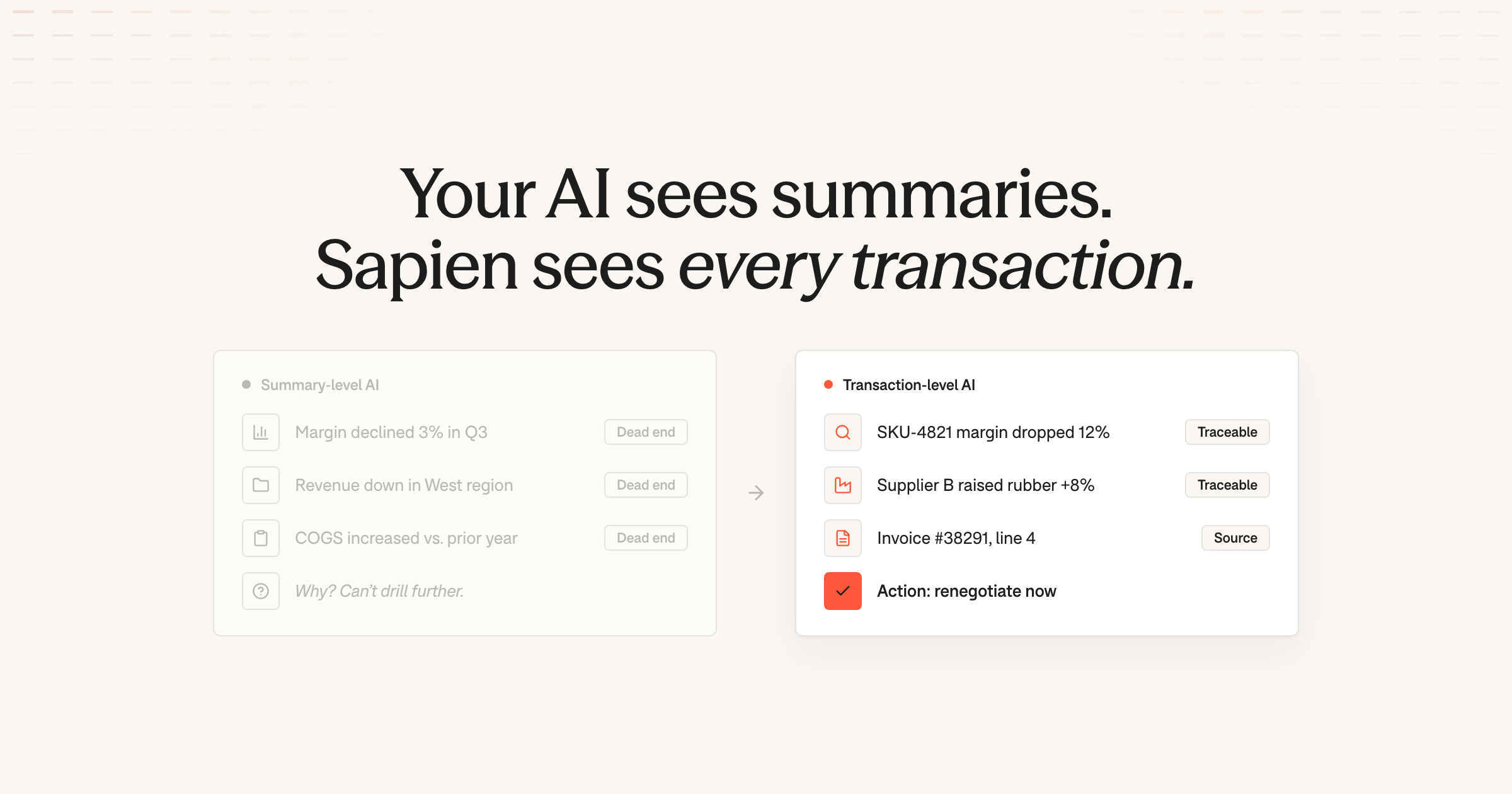
A generic finance model is good at the average company. Finance teams do not close the average company. They close this one, with its chart of accounts, its intercompany, its customer programs, and the rule that lives in a controller's head.
This is for the leader comparing an AI product that "understands finance" with one that has to understand their business. Company context is the specific definitions, hierarchies, joins, and exceptions. A model that skips them will sound fluent and still mis-state the margin.
What the generic model gets right, and where it stops
It can define gross margin, a variance, and a forecast. That is useful vocabulary. It stops at the point where this company disagrees with the textbook: overhead that is excluded from the plant margin, a class of revenue that is internal, a SKU prefix that means seasonal, a cost center that is really a project. Those exceptions are the analysis.
How Sapien learns a company is the account of building that representation from the systems and from the corrections people make. Why AI gets smarter and dashboards do not is the product consequence. A dashboard keeps the logic it was given in January. A system with company context can keep a correction made in March and use it in June.
How context shows up in a workflow
Finance automation is a set of workflows, not a single prompt. Each of them is wrong if the definition is generic.
- A variance bridge that uses a textbook split of price and volume will not match the bridge the board has been reading.
- A reporting draft that does not know which items this company calls one-time will invent a story.
- A margin walk that ignores a customer program will recommend a price change the commercial team already rejected.
The implementation practice is to check the workflow against a period the team already closed, which is the point of AI implementation for finance. Context is not a phase that happens after the value. It is the thing that makes the first answer checkable.
What &pizza needed from context
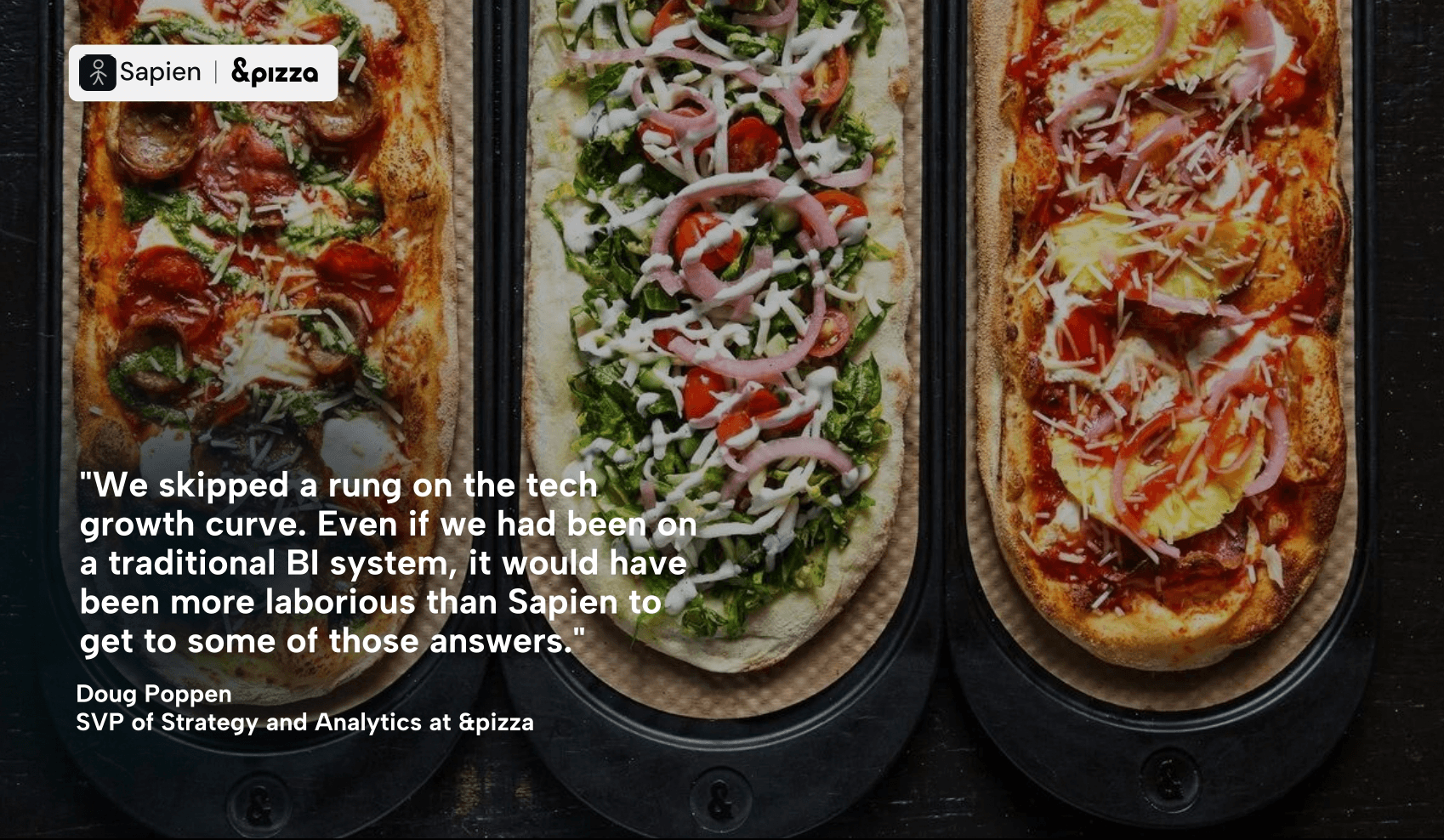
&pizza did not need a generic restaurant benchmark. Shop leaders needed their stores, their dayparts, and their labor, asked in plain language, without a ticket. The &pizza case study describes 46 locations and the removal of a manual daily reporting process. The context was the company's own grain of analysis. A generic model of "QSR performance" would have published a comparison the operators could not act on.
Where to go next
This is the last piece in the traceable-finance series. Start from the definition in what traceable finance analytics means, or go to the finance automation hub for the workflows. To see the difference on your definitions, book a demo.