Agentic AI for Finance and Accounting
What an agent should mean for a finance team: a workflow that can take the next step, show its work, and stop when a person needs to judge.
The Sapien Team
Sapien
"Agent" has become a loose word. In finance it should mean something specific. An agentic system for accounting and FP&A can move a recurring workflow from the question to a sourced explanation, and it can stop where a person has to decide. A chat window that writes a paragraph about last month's margin is not that system.
This page is for the finance leader evaluating agentic AI. The definition to hold the vendors to: an agent that runs a company-specific finance or accounting workflow, shows the steps, and leaves the judgment with the team.
What the agent is allowed to do
A finance agent earns its name when it can do the mechanical sequence a senior analyst already does:
- Find the sources for a question the team has asked before.
- Apply the definition the company uses, including the exceptions.
- Produce the bridge or the flux with the drivers named.
- Hand back a draft a person can accept, edit, or reject.
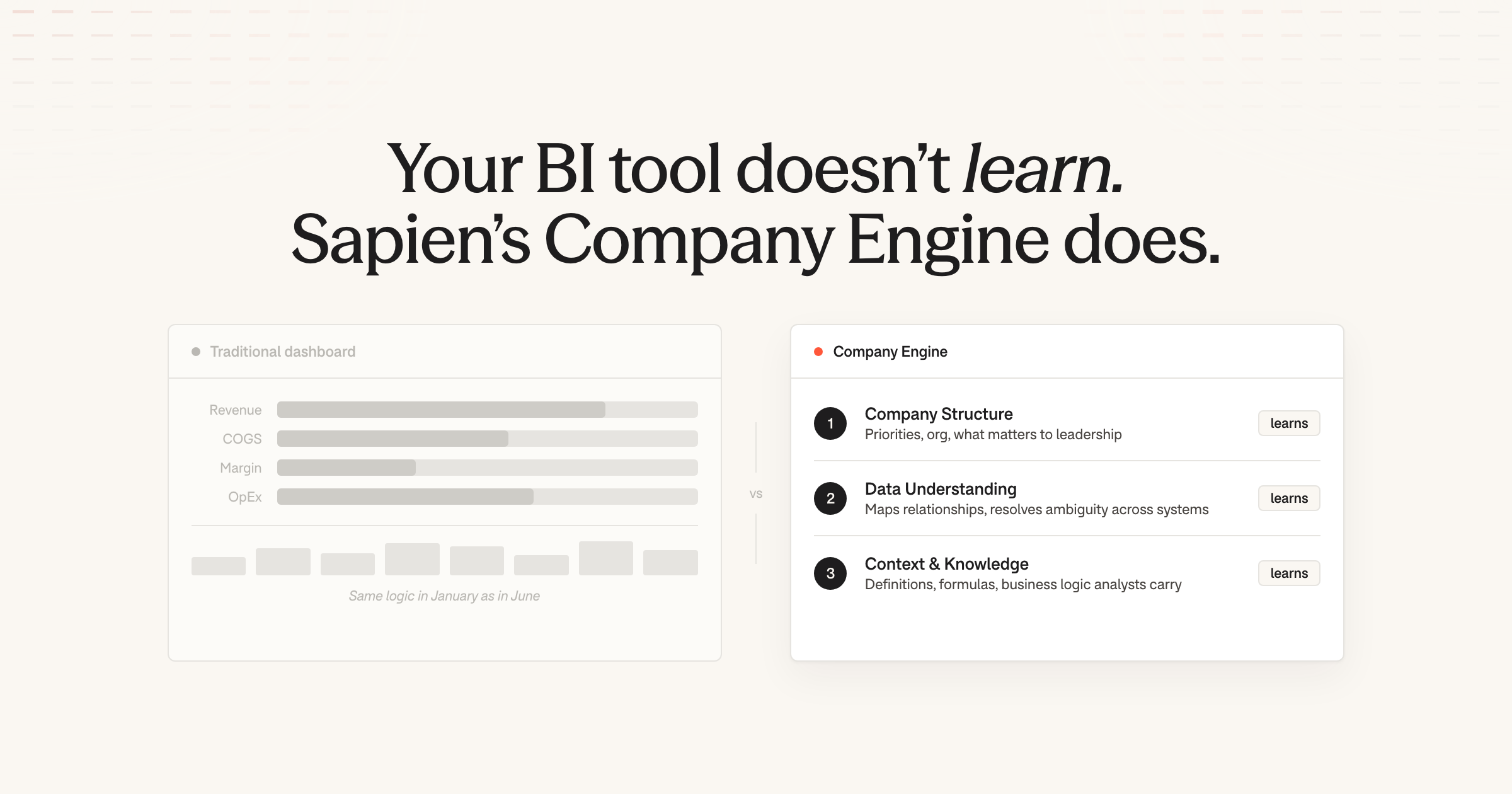
It does not earn the name by browsing the web, or by answering a question that has no connection to the ledger. How Sapien learns a company is the description of the context those steps require. Without that context, an agent is a faster way to be generically wrong.
Where a person stays in the loop
The steps that change the business stay with a person. Posting an entry, locking a forecast, and sending the board note are decisions. The agent can prepare them. How we build trustworthy AI for CFOs explains the product consequence: the reasoning has to be visible, because the person who signs the number has to be able to challenge a source or a filter.
Verifiability is the piece of that argument that matters most for agents. A non-deterministic step is acceptable when the calculation itself is done by a tool the team can inspect. It is not acceptable when the only record is the final paragraph.
How this differs from a point solution
A point solution automates one report and stops. An agent that shares the company's representation can take the next question — the plant, the customer, the accrual — without a new integration project. That is the argument in why finance and operations AI wants a partnership, not another point solution. The finance automation hub lists the workflows that partnership is for.
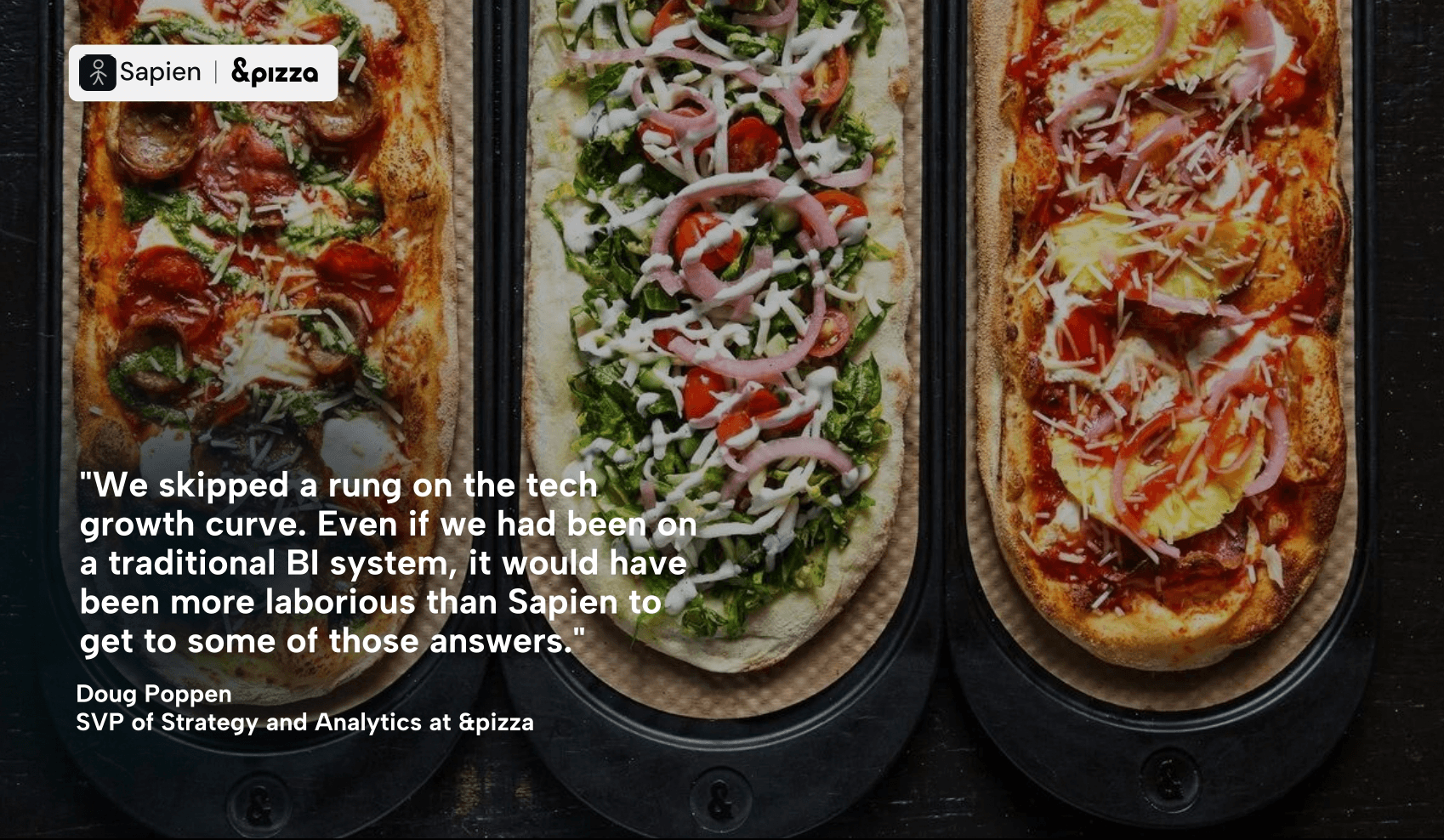
&pizza is a concrete version. Shop leaders needed performance answers without a ticket to the analytics team. The &pizza case study describes daily reporting moving off a manual process and 46 locations asking questions in plain language. The agent-shaped part is not the chat. It is that the next question did not restart the implementation.
Where to go next
If you are choosing a first workflow, read don't start with AI, start with a problem. The version that keeps working a goal after the first answer is Proactive. If you are ready to see one run, book a demo.